

By Guest Blogger Ernest Nate Benjamin
Hello again, friends, family, and supporters of Family and Friends of Individuals with Mental Illness!
Before I begin, I’d like to share a thought-provoking quote:
“It becomes more necessary to see the truth as it is if you realize that the only vehicle for change are these people who have lost their personality. The first step, therefore, is to make that person come to themself; pump back life into their empty shell; to infuse them with pride and dignity.”
– Steve Biko
This quote hit me hard. It inspired me. It reminded me of all I’ve become behind these walls.
A few weeks ago, a couple of extraordinary women I know had another opportunity to speak with the commissioner of the Department of Corrections. The lead topic was the importance of implementing meaningful programs in prisons.
For me, the light came on when I was in the depths of MCI Walpole. I wanted to change myself , but I didn’t know how. When I eventually arrived at MCI Norfolk, I began to understand myself through the self-help programs offered there. Since 2001, I have consistently engaged in learning and applying the priceless lessons from these programs to better myself.
I once read a quote by the late civil rights activist Roy Wilkins:
Muffle your rage. Get smart instead of muscular.”
That quote spoke to me. It helped me realize that my mind is my most important muscle. With knowledge, I could control my rage.
These programs have been critical to my rehabilitation. That’s why we need more programs focusing on conflict resolution, self-love, and mental health.
Why Programs Matter
When I think about the majority of men who came up with me, in and out of prison, we truly weren’t thinking. We weren’t thinking when we committed crimes or engaged in a criminal lifestyle. We weren’t thinking about the consequences of our actions, the pain caused to victims and their loved ones—or even our own loved ones.
I’ll be honest: thirty years ago, I didn’t even want to live. I was consumed by internal pain. Many of us lacked self-love, respect, and unity. For African-American men, in particular, these struggles often stem from generational trauma dating back to slavery. Without love and knowledge of self, we inflicted pain on our communities and fell into a cycle of ignorance and dysfunction.
Programs and education have helped me break free from that cycle. They’ve helped me understand my value and my responsibility. And that’s why I’m asking the State powers, the Governor and the Department of Corrections, to bring more meaningful programs and community engagement into our prisons.
The Reality at Old Colony Correctional Center
If you look at the Old Colony Correctional Center’s website, you’ll see a list of programs they say are being offered there and are making an impact. But a number of those programs have been removed, and I haven’t seen any that truly prepare men for reintegration into society, which is vital to me, to us. Where are the community engagement organizations the DOC claims to partner with to enhance public safety and provide support?
Here’s what we know:
- Nearly 80% of incarcerated individuals will eventually return to their communities.
- A significant number of incarcerated people unknowingly suffer from mental illness or trauma.
We need programs that effectively address these issues so we can better engage with this population and prepare them to reenter society.
The Numbers Don’t Lie
In Massachusetts, gun deaths have decreased overall, but even one death is too many. According to the CDC, in 2022:
- 269 people in Massachusetts were affected by gun violence.
- 106 were homicide victims, and 149 died by suicide.
- Tragically, 12 children (ages 1–17) lost their lives.
- The overall gun death rate increased by 18% compared to 2013.
- People aged 15–34 accounted for 63% of gun deaths.
These numbers show the need for better support and preparation—not just for reintegration, but for prevention.
Restorative Justice and Beyond
One impactful program we had at Old Colony was a restorative justice reading group. It taught me the truth in the phrase:
“Hurt people hurt people. Healed people heal people.”
Sadly, that program hasn’t been offered at Old Colony in nearly four years, although it is still listed on the Old Colony website. This is just one example of programming that would be helpful but has been removed.
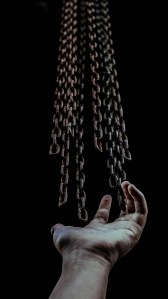
I implore volunteers and activists to dedicate time and energy to reinstate and enhance meaningful programming into our prisons. Let’s build a bridge for those who will eventually be released, so they can get the help they need to succeed, not just to benefit themselves, but to benefit society as a whole.
Without programs, there is no hope. And without hope, what is there?
Containment, Punishment, Profit
Today’s prison system isn’t what it used to be. The old-timers here tell me this often. Rehabilitation is no longer a priority. Instead, prisons focus on containment, punishment, and profit.
Programs that once gave inmates hope—like Pell Grants and educational opportunities—are vanishing and in some cases entirely gone. If you examine Massachusetts’ prison budget, you’ll see how little is spent on rehabilitation. Shouldn’t we focus on preparation, rehabilitation, and communication instead?
A Call to Action
I ask you, as a collective, to contact the commissioner’s office at the DOC (shawn.jenkins@doc.state.ma.us), as well as the Governor’s office, and demand meaningful change. Let’s love and support one another during these holidays.
And please support the FFIMI blog and committee. Stay tuned for my upcoming Facebook, YouTube, and podcast project: Beautiful Things Come From Struggle. You can also check out my blog at ernestnatebenjamin.blogspot.com.
With that, I say: God bless and peace.
— Ernest “Big Nate” Benjamin

 Family and Friends of Individuals with Mental Illness ~ Advocating for those who are Justice Involved
Thank you so much for sharing from your first-hand experience. Knowledge is power!
On Mon, Dec 9, 2024 at 9:59 AM Family and Friends of Individuals with
LikeLike
Very well said 🙏
Yahoo Mail: Search, Organize, Conquer
LikeLike
Nate, thank you for investing your time and effort to shed light on the need
for restorative rehabilitation programs. That is something so important
to my heart as I value every human being and believe everyone deserves a
second chance and perhaps a third and fourth chance to learn how to best
function in a productive, empathetic and compassionate manner in our
shared society. One program is good but as human beings who struggle between good and evil, we need to keep learning, reinforcing and growing into wisdom and maturity. We need to continuously educate ourselves and in order for inmates to do so, they must be provided with the tools and
rehabilitative programs to attain such self-education. I think of the
words of Jesus who said we must love one another as we love ourselves.
What a concept! If we strive towards that type of living, what a
difference we could make in this world. Keep up the good work,
Nate. I am impressed at your desire to make your world a better place
where many can find redemptive restoration and rehabilitation. I am
grateful you have come into my worldview and have broadened my
perspective with your perspective! Please know that your voice is not
only informative but inspirational. Warm Regards, Donna
LikeLike
Thank you Nate for sharing,
You are clearly an intelligent man. Your writing skills excellent. I hope you will keep sharing. I hope you do not mind but I would like to share this with Saint Vincent DePaul to give them better insight to what prisoners, mental health persons need. I was wondering if you could comment on preventative parenting so children can avoid what you have had endured and afflictions you may have caused others.
thanks again Mary
LikeLike